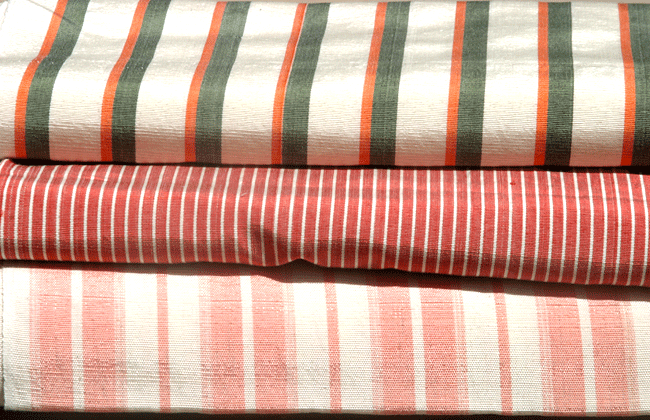
Kutnu, woven on a wooden loom, is a fabric made from rayon (floss), artificial silk, and cotton yarn, available in various motifs and colors. It is woven only in Gaziantep in Turkey and is produced using a shuttle weaving technique on a whip-type draw loom.
Before weaving, the yarn, prepared through various stages, is processed by several skilled craftsmen. These include "comb makers," "sizeers," and "dyers," each representing a different level of expertise. Today, many of these craftsmen have become extinct in Gaziantep.
Weaving this yarn, dyed with root dyes and as thin as a strand of hair, onto the loom to create various motifs requires a unique skill. In Gaziantep, this craft, which dates back to ancient times, is said to be a significant source of livelihood, practiced by all family members together in homes, and there are around 3000 weaving cooperatives. However, the developing textile industry has naturally led to the abandonment of this profession.
Kutnu fabric, named according to its warp count, has varieties such as "kutnu," "alaca," and "meydaniye." Those with 4000 warp threads are called kutnu, those with 3000 are called alaca, and those with 2000 are called meydaniye.
Due to the loom length, the fabric width varies between 50-60 cm. Woven from silk and cotton yarn, it is a cool and healthy fabric in summer. Formerly worn by brides, grooms, farmers, and wealthy individuals in villages, and later widely used in folkloric clothing, kutnu fabric has now become a fabric carefully featured by fashion designers in evening wear.